--(sneaky cheating lies and double-speak?)--Steve fly
http://www.guardian.co.uk/media/2012/may/01/phone-hacking-report-wilful-blindness?newsfeed=true
Phone-hacking report: what is 'wilful blindness'?
The allegation is not a specific legal term, but experts say it is one of the most damning findings in the MPs' report
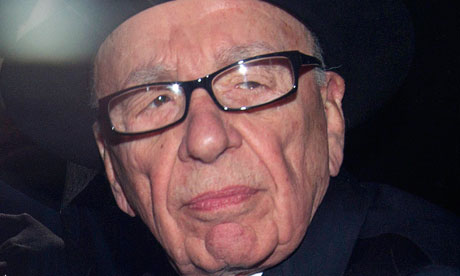
Rupert Murdoch denied 'wilful blindness'
in his evidence to the committee. He said: 'I have heard the phrase
before, and we were not ever guilty of that.' Photograph: Olivia
Harris/Reuters
The charge of "wilful blindness" and "wilful ignorance" is
referred to four times in the MPs' report into phone hacking and has
been instantly picked up by legal experts as one of the most damning
findings.
The allegation – levelled at Rupert and James Murdoch as well as the directors of News International and its parent News Corporation – does not denote a specific legal wrongdoing but strongly points towards an accusation that those at the top, and additionally those responsible for scrutinising their actions, breached their fiduciary duties.
News Corp non-executive directors include a spread of prominent business and political figures, among them the former Spanish president José María Aznar and the former British Airways boss Sir Rod Eddington.
One lawyer, who would not be named, said he thought the findings of MPs raised the prospect of News Corp shareholders launching a class action claim in the US. "If I was a disgruntled shareholder and I wanted evidence, this report gives some of that … I think it potentially opens them [News Corp] up to a class action."
The MPs found: "In failing to investigate properly, and by ignoring evidence of widespread wrongdoing, News International and its parent News Corporation exhibited wilful blindness, for which the companies' directors – including Rupert Murdoch and James Murdoch – should ultimately be prepared to take responsibility."
The phrase came up during evidence to MPs and James Murdoch was asked the direct question by the Lib Dem MP Adrian Sanders: "Are you familiar with the term 'wilful blindness'?" Sanders described the phrase as "a term that came up in the Enron scandal … a legal term. It states that if there is knowledge you could have and should have had it."
In response James Murdoch said he had not heard the term, but his father added: "I have heard the phrase before, and we were not ever guilty of that."
Niri Shan, head of media law at Taylor Wessing, said the phrase was not, in fact, a formal legal term. That said, he added: "If you are wilfully blind, from a corporate governance perspective, you have not fulfilled your fiduciary duties."
He added that some of the sting of the MPs report, in his opinion, had been removed by the fact that the committee had been split on many issues down party-political lines.
The allegation of wilful blindness – sometimes referred to in Britain as turning the Nelsonian eye – is, in a legal context, often levelled by prosecutors at defendants who acknowledge they have unwittingly played a part in a criminal act of which they had no knowledge at the time.
When it comes to the business world, however, the allegation can be more powerful as directors of companies are required by law to exercise proper responsibility on behalf of the company's shareholders. Wilful blindness was the subject of a book by the entrepreneur and author Margaret Heffernan last year. She suggests the concept can be an unspoken attitude common to a large group – the Catholic Church, the military in Afghanistan and Nazi Germany are all example she cites.
Heffernan has been a stern critic of News Corp, publishing several articles attacking the appointment of family members in key executive roles.
The allegation – levelled at Rupert and James Murdoch as well as the directors of News International and its parent News Corporation – does not denote a specific legal wrongdoing but strongly points towards an accusation that those at the top, and additionally those responsible for scrutinising their actions, breached their fiduciary duties.
News Corp non-executive directors include a spread of prominent business and political figures, among them the former Spanish president José María Aznar and the former British Airways boss Sir Rod Eddington.
One lawyer, who would not be named, said he thought the findings of MPs raised the prospect of News Corp shareholders launching a class action claim in the US. "If I was a disgruntled shareholder and I wanted evidence, this report gives some of that … I think it potentially opens them [News Corp] up to a class action."
The MPs found: "In failing to investigate properly, and by ignoring evidence of widespread wrongdoing, News International and its parent News Corporation exhibited wilful blindness, for which the companies' directors – including Rupert Murdoch and James Murdoch – should ultimately be prepared to take responsibility."
The phrase came up during evidence to MPs and James Murdoch was asked the direct question by the Lib Dem MP Adrian Sanders: "Are you familiar with the term 'wilful blindness'?" Sanders described the phrase as "a term that came up in the Enron scandal … a legal term. It states that if there is knowledge you could have and should have had it."
In response James Murdoch said he had not heard the term, but his father added: "I have heard the phrase before, and we were not ever guilty of that."
Niri Shan, head of media law at Taylor Wessing, said the phrase was not, in fact, a formal legal term. That said, he added: "If you are wilfully blind, from a corporate governance perspective, you have not fulfilled your fiduciary duties."
He added that some of the sting of the MPs report, in his opinion, had been removed by the fact that the committee had been split on many issues down party-political lines.
The allegation of wilful blindness – sometimes referred to in Britain as turning the Nelsonian eye – is, in a legal context, often levelled by prosecutors at defendants who acknowledge they have unwittingly played a part in a criminal act of which they had no knowledge at the time.
When it comes to the business world, however, the allegation can be more powerful as directors of companies are required by law to exercise proper responsibility on behalf of the company's shareholders. Wilful blindness was the subject of a book by the entrepreneur and author Margaret Heffernan last year. She suggests the concept can be an unspoken attitude common to a large group – the Catholic Church, the military in Afghanistan and Nazi Germany are all example she cites.
Heffernan has been a stern critic of News Corp, publishing several articles attacking the appointment of family members in key executive roles.
